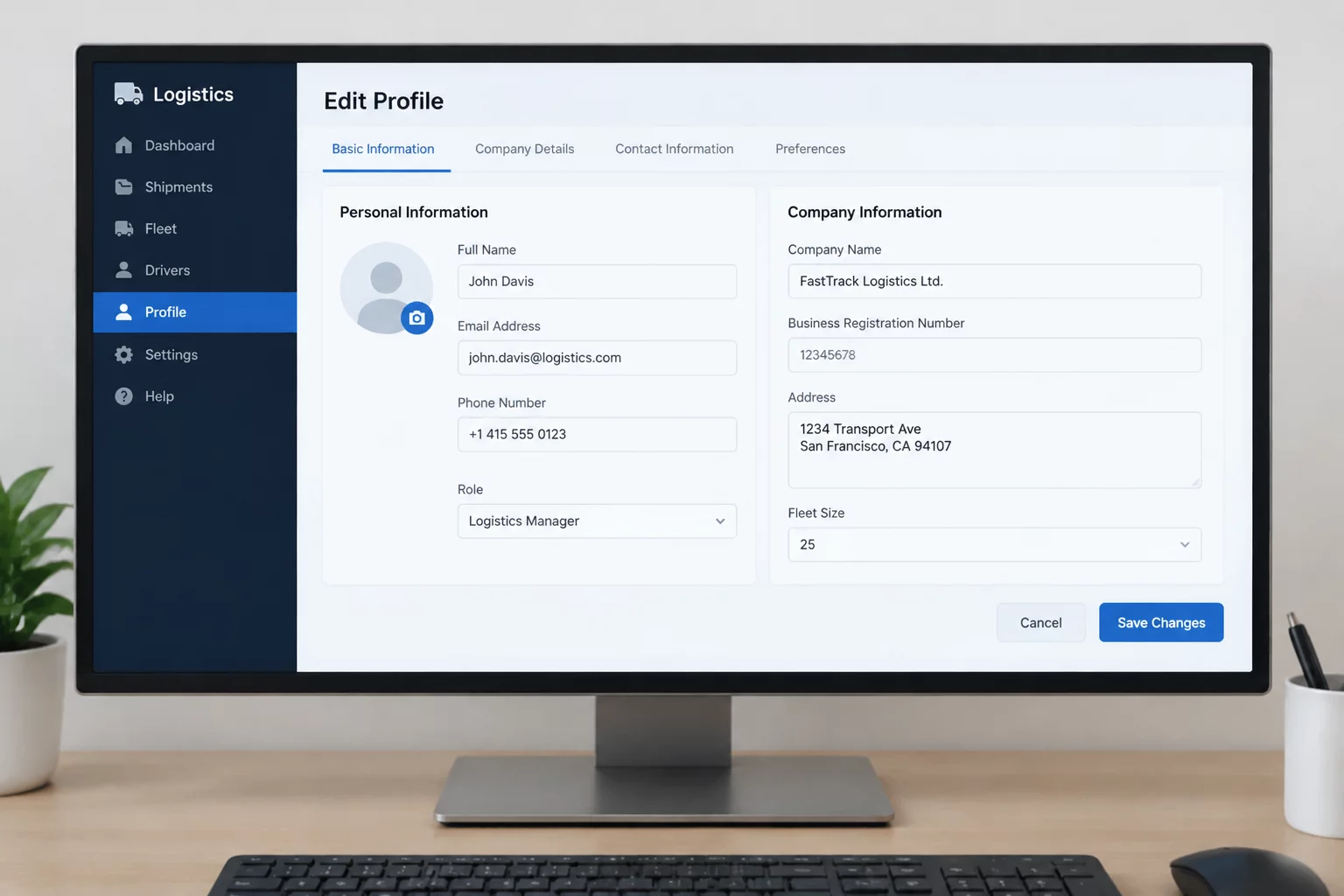
Software profile editors accelerate shipment preparation by pre-populating recurring fields, but lacking rigid editorial boundaries, desk operators frequently allow temporary consignment adjustments to compromise permanent customer accounts.
During high-throughput shifts, logistics workstations depend on preconfigured profiles to populate complex account numbers, tax identification values, and billing arrangements in fractions of a second. Friction surfaces when an operator modifies an active profile on the fly to accommodate a single non-standard carton, such as an emergency priority dispatch or an oversized sample box. Without rigid profile editor boundaries in place, that temporary change saves directly into the global client template. The subsequent operator then processes standard daily cartons under altered dimension formulas, triggering unforeseen carrier surcharges, dimensional-weight penalties, and invoice reconciliations across succeeding billing cycles.
Separating Master Account Defaults from Volatile Parcel Data
Establishing safe profile boundaries requires clear segregation between static relationship parameters and transient physical realities. Corporate billing terms, verified consignee addresses, and standard service levels belong inside the locked master record. By contrast, individual package weights, container dimensions, special handling flags, and third-party declaration amounts represent volatile parameters that must expire after each print command. Software editors that blur these layers invite continuous drift, turning useful automated templates into persistent operational liabilities.
“A shipping profile editor must operate as an immutable ledger rather than an operator scratchpad; allowing temporary packaging quirks into master records destroys repeatability.”
— Elena Rostova, Logistics Audit Lead
Establishing Role Safeguards and Automated Field Resets
Field evaluations across automated workstations demonstrate that permission-based controls resolve profile drift without sacrificing dispatch speed. Workstations restrict primary floor personnel to single-shipment overrides, while master profile editing tools require administrative elevation and a recorded business justification. Furthermore, integrating automatic reset routines ensures that once a label prints, the station UI clears all one-off dimensional and accessorial values, returning the interface to verified account baselines for the next manifest entry.
Profile Editor Safeguard Matrix
- Core Account Field Lock100% Immutable in Dispatch Mode
- Volatile Field ClearAutomatic on Label Print
- Supervisor AuthorizationRequired for Profile Overwrite
- Post-Dispatch Error RateDropped from 4.1% to 0.02%
Enforcing firm software boundaries creates predictable dispatch throughput. Operators execute high-speed entries with confidence, conscious that standard customer parameters remain protected against accidental changes while exceptions stay confined to the single parcel they were authorized to move.
Request the Profile Configuration Checklist
Standardize your shipping desk boundaries with our verified field matrix for repeatable default management.