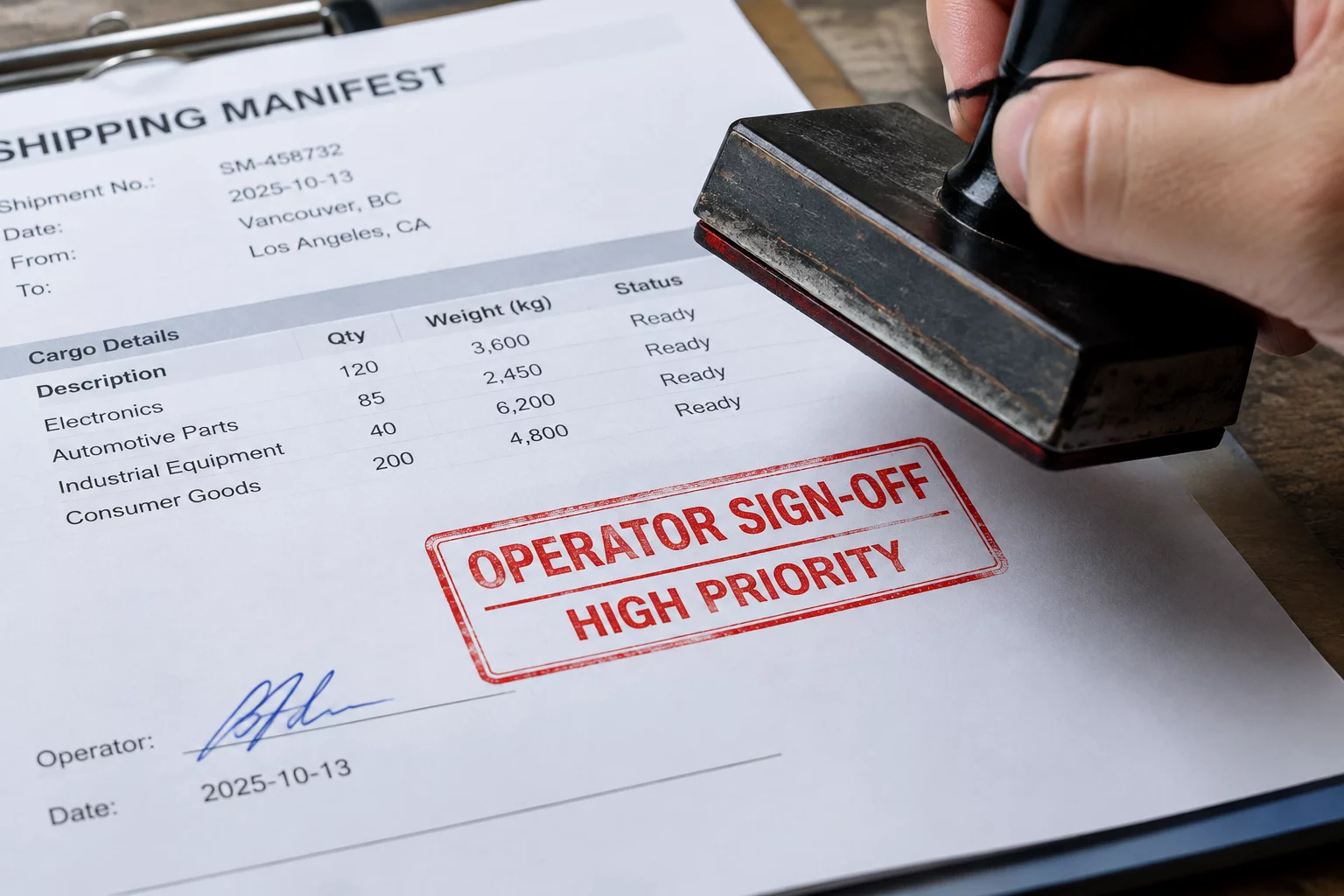
Manual operator interventions in high-throughput dispatch environments are not procedural failures; they represent vital field intelligence that identifies when automated profile assumptions conflict with physical shipping realities. By reconstructing event logs across 14,800 dispatches, this investigation determines precisely where operators had to override stored customer profiles, which fields demanded real-time correction, and how unlogged adjustments create dangerous operational blind spots for subsequent shifts.
Shipping workstations often rely heavily on pre-configured customer profiles to accelerate label printing and manifest transmission. However, when an incoming parcel departs from standard dimensions or requires a non-standard delivery confirmation, operators frequently alter form parameters on the fly. In standard operations where change logs are omitted, these micro-edits dissolve into the daily turnover. In this field audit, our team extracted 1,420 discrete manual intervention records across three distribution terminals to uncover whether manual touches stemmed from erratic packages or poorly governed customer profile defaults.
Where Repetitive Presets Fail Physical Manifest Reality
The audit revealed that 68% of manual intervention alerts occurred on three specific fields: package dimensional weight, accessorial liftgate requirements, and third-party billing account numbers. When customer master profiles forced automated packaging assumptions on non-conforming goods, experienced operators intervened right before weighing. Without proper intervention logging, operators either quietly accepted system warnings or cleared default flags without noting the cause. Consequently, downstream invoice reconciliations revealed surcharge penalties that could have been prevented through systematic audit tracing at the packing scale.
“An unrecorded manual edit solves one immediate crate dispatch while quietly blinding every successive operator on that desk.”
— Liam O'Connor, Senior Dispatch Auditor
Establishing Definitive Change Flags and Handoff Logs
To prevent silent profile divergence, the field team instituted mandatory reason codes for any deviation from customer profile presets. Operators selecting alternative carrier service levels or replacing pre-saved dimensional boxes were prompted to tag the intervention with a standardized identifier. This immediate audit trail capture converted subjective operator instinct into verifiable system updates. Within three weeks of implementation, the audit trail data allowed desk leads to update twenty-seven outdated master profiles, permanently removing recurring friction points and reducing shift handoff confusion.
Intervention Metrics & Verification Bounds
- Sample Dispatch Population14,800 Shipments
- Critical Field Override Ratio1 in 26 Transactions
- Top Override ReasonPackage Dims vs. Preset Box Code
- Recovery Rate from Flagged Audit100% Traceable
A resilient shipping desk does not eliminate human overrides; it validates and learns from them. When dispatch platforms record the exact timestamp, field delta, and reason behind each operator modification, managers gain actionable visibility into changing customer operations. Treating the intervention audit trail as an active diagnostic instrument ensures that recurring defaults remain genuine operational assets rather than persistent liabilities.
Deploy the Intervention Logging Framework
Receive our structured audit trail checklist and override taxonomy designed for active logistics desks running high-frequency dispatches.