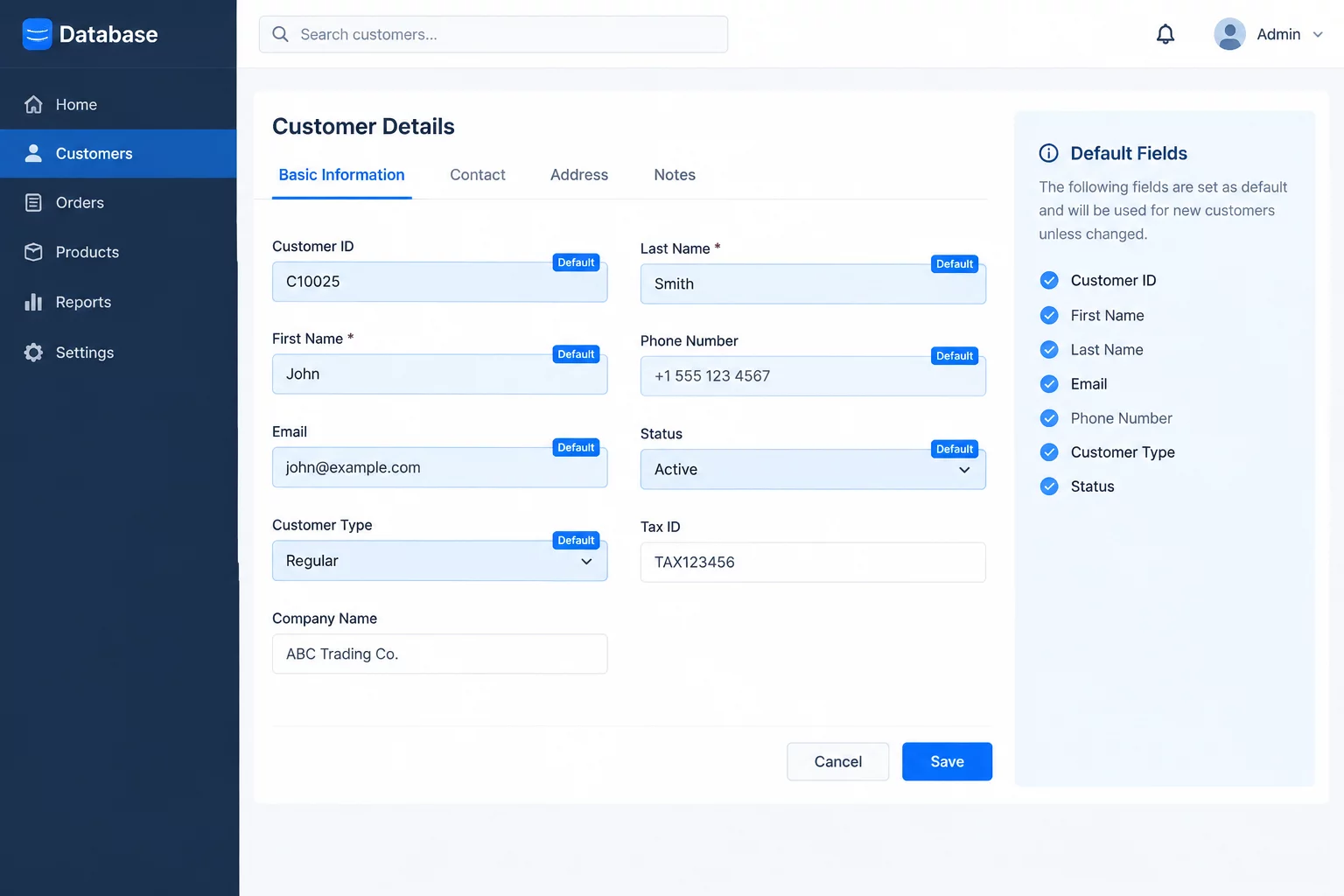
A customer default profile is designed to eliminate keystrokes and accelerate dispatch workflows, yet packing too many operational assumptions into a single customer profile turns convenience into systematic liability. Shipping desks frequently experience recurring rate discrepancies, unintended transit tiers, and misrouted cartons simply because variable package characteristics were hardcoded alongside permanent commercial terms.
Profile Field Boundary Rules
- Permanent Account Constants
- Third-party account number, registered consignee address, tax clearance ID
- Strictly Volatile Fields
- Package gross weight, box dimensions, declared cargo valuation, daily accessorials
- Conditional Service Presets
- Default service level permitted only with mandatory manual review gates
- Operator Review Metric
- Reduces post-invoice billing corrections across high-volume accounts by up to 88%
The Danger of Overpopulating Customer Profiles
When configuring enterprise profiles in systems such as UPS WorldShip, dispatch leads often succumb to the urge to populate every available field. Setting a fixed package weight, locking in signature requirements, or hardcoding an express air service tier feels like time saved during peak fulfillment windows. In practice, however, cargo specifications fluctuate while customer business relationships endure.
A shipper who regularly sends two-pound replacement modules will inevitably need to dispatch a fifteen-pound diagnostic rig or an emergency batch of printed manuals. When shipping desks allow physical package attributes to reside inside the account-level default, line operators bypass the physical scale. The software accepts the cached default, generates a commercial label, and dispatches an under-declared parcel that triggers audit penalties, carrier adjustment surcharges, and friction with customer accounting.
Audit Your Customer Profile Templates
Verify baseline account criteria against our standardized profile configuration protocols.
The Four Tests for Default Field Qualification
To maintain spotless integrity across high-speed shipping lines, every data field proposed for a customer default template must satisfy four rigorous operational tests before administrators permit its retention in software master files:
When an operator presets weight, carton dimensions, or accessorial fees inside a customer profile, every dispatch that follows shifts from a validated procedure into an uninspected gamble.
Review your active client master profiles against this qualification standard to separate enduring commercial agreements from dispatch-level reality:
- Invariance across consecutive dispatches: the value remains identical across ninety-nine out of one hundred separate consignments without seasonal deviation.
- Independence from physical packaging: the field describes the contractual relationship or tax identity rather than the carton exterior, parcel contents, or scale readouts.
- Clear auditability: an incorrect value in this field can be traced directly to an explicit master service agreement or contractual billing arrangement rather than packing bench discretion.
Protocol for Borderline and Conditional Defaults
Service levels and specialized accessorials occupy a contentious middle ground. For contracts where clients explicitly mandate ground transit across all standard orders, setting the service level as a default appears justifiable. Nonetheless, emergency order overrides routinely occur. Desks should configure software prompts that force confirmation of service class whenever parcel weights exceed pre-established thresholds.
By separating static account architecture from transactional cargo data, logistics desks build resilient dispatch workstations. New warehouse operators can process repetitive consignments at speed without carrying the hazardous cognitive load of guessing whether a defaulted package dimension matches the actual box resting on the conveyor.