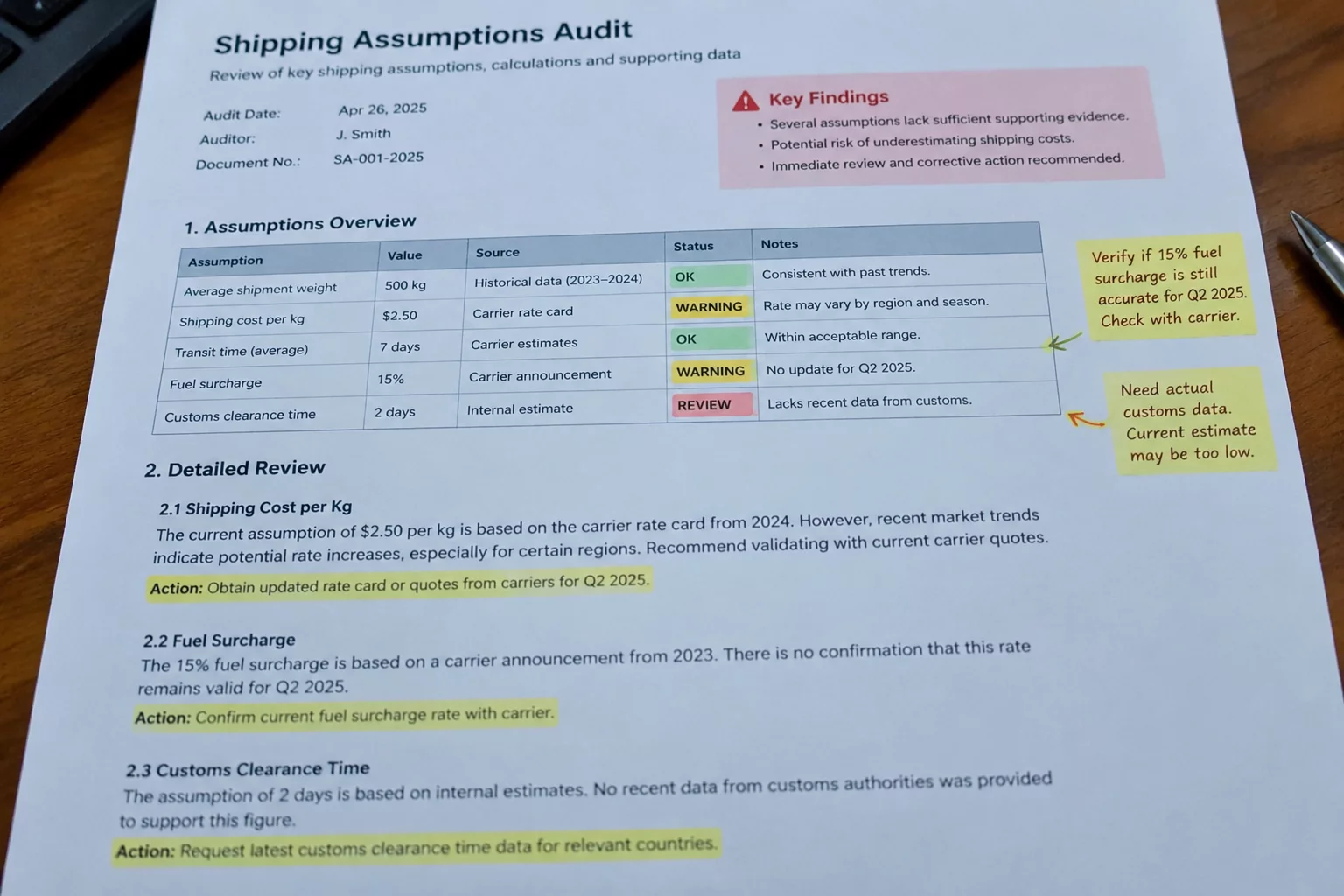
A default configuration begins its life as an intentional shortcut designed to accelerate repetitive manifest generation. Over successive quarters, shifts rotate, customer contracts alter their handling conditions, and the original business rationale fades into procedural memory. The configuration remains static while physical shipments diverge, transforming what was once an efficient time-saver into an unexamined operational liability.
Incident Overview & Risk Profile
- Trigger Mechanism
- Unaudited profile retention past customer billing cycle migration
- Operational Consequence
- 14 consecutive freight dispatches misrouted to regional hub consolidation
- Financial Exposure
- $4,820 in emergency expediting charges and residential accessorial surcharges
- Desk Remedy
- Mandatory 60-day profile expiration and parameter validation checkpoints
The Gradual Drift from Practical Convenience to Operational Inertia
Software defaults exist to minimize redundant keystrokes. When a distribution customer dispatches three hundred cartons of dry goods every Tuesday, auto-filling warehouse loading zones, standardized packaging dimensions, and standard ground service levels represents practical engineering. Dispatchers execute orders in seconds without rekeying identical data points. However, speed breeds complacency across multiple dispatch shifts.
As operational momentum takes over, warehouse clerks treat the green checkmark of pre-filled fields as confirmation of accuracy rather than merely an unverified baseline. When the account changes its consignee delivery dock or switches product fragility tiers, the desk continues pressing print. The discrepancy surfaces only after parcels miss line-haul cutoffs or trigger unexpected accessorial fee re-bills from the carrier.
Audit Your Recurring Customer Defaults
Review our baseline dispatch framework to isolate static customer parameters from dynamic package variables before routine dispatches fail carrier validation.
Field Audit: Anatomy of an Unchecked Default Breakdown
In a documented case review involving a major manufacturing distributor, a third-party logistics account retained a historical default setting marking all freight as standard dock delivery without liftgate requirements. For eleven months, shipments moved smoothly because deliveries went exclusively to industrial depots equipped with standard docks. In September, the client expanded into suburban distribution hubs with variable receiving bays.
A profile default should never be treated as immutable gospel. It is merely a historical snapshot of what was true on the day the account was entered.
The dispatch desk completed fourteen dispatches under the assumption that the established profile handled all account requirements automatically. The resulting failure cascade triggered severe supply chain bottlenecks:
- Initial rejection at destination terminal due to lack of scheduled tailgate hydraulic equipment
- Secondary redelivery fees and terminal storage penalties accrued over four business days
- Complete breakdown of carrier service level commitments requiring executive client escalation
Implementing Robust Guardrails Against Procedural Drift
Preventing assumption drift requires distinct operational boundaries between client profiles and shipment variables. The customer master profile should house billing entities, master account numbers, and general communication preferences. It should never dictate dynamic package attributes, specialized accessorials, or seasonal delivery requirements without an explicit confirmation prompt.
Leading logistics teams implement mandatory review cycles for established profiles. By attaching an automated sixty-day audit flag to saved shipping templates, dispatch software can require operators to verbally or digitally verify service parameters with the client. When defaults are treated as tentative baselines rather than permanent truths, dispatch desks preserve operational speed without inviting catastrophic blind spots.