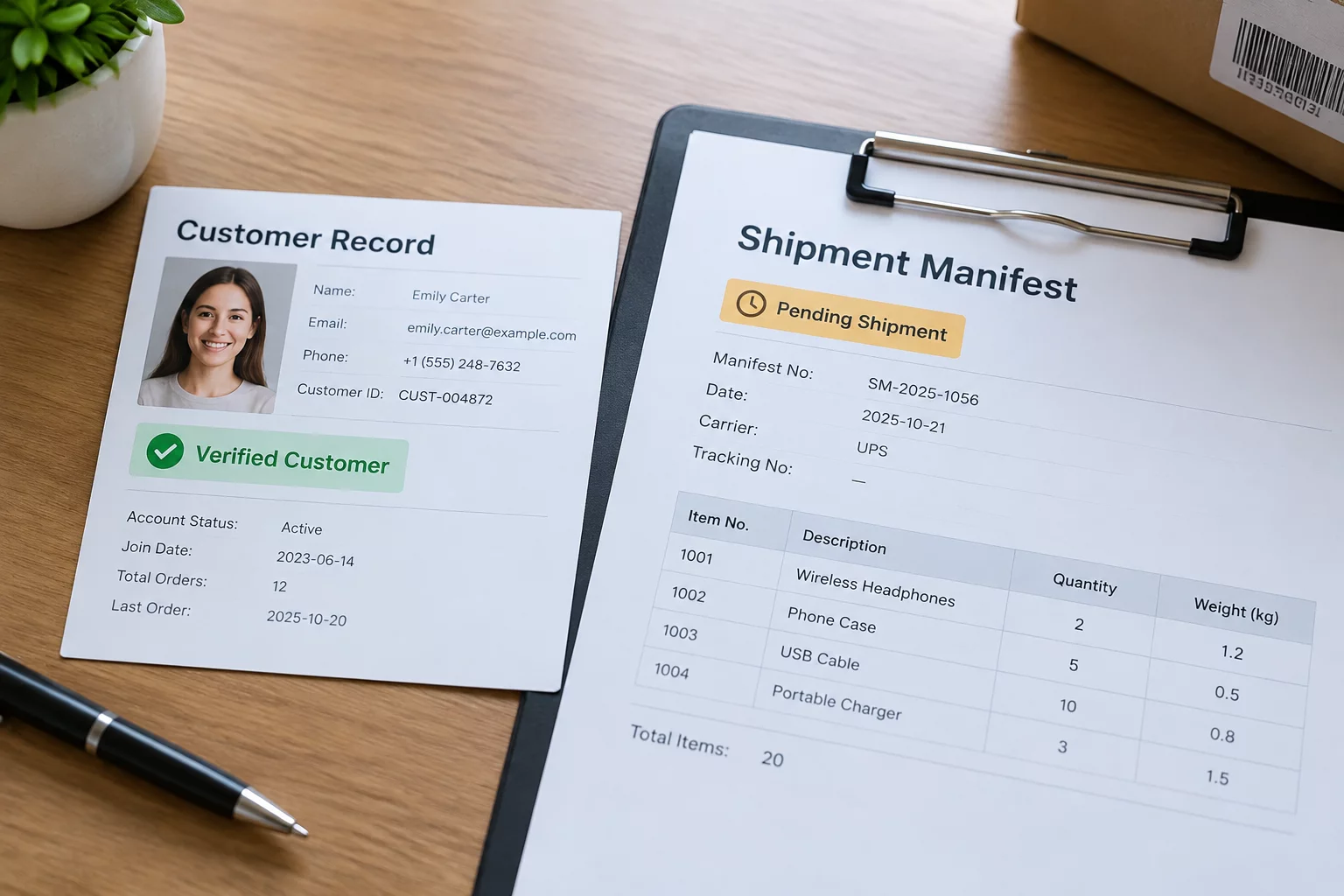
A common trap on high-volume logistics desks is assuming that because the recipient master record passed validation, the consignment itself requires no further scrutiny. In reality, a flawless customer account only confirms static profile data such as tax IDs, billing entities, and standard receiving docks. Individual dispatches frequently diverge in package weight thresholds, declared cargo valuation, hazardous material flags, or urgent delivery windows. Overlooking per-package variables while relying entirely on clean customer records routinely produces billing disputes and rerouting delays.
Incident Baseline & Profile Snapshot
- Record Verification State
- 100% Validated Corporate Master File
- Trigger Exception Point
- Declared Value & Oversize Surcharge Divergence
- Target Consignee Dock
- Regular Distribution Hub (Bay 4)
- Operational Resolution
- Package-Level Parameter Override Applied
Static Profile Integrity Versus Dynamic Consignment Data
Customer records represent institutional consistency across recurring dispatch cycles. They store corporate parent accounts, default bill-to numbers, established delivery contacts, and standard operating instructions agreed upon during vendor setup. Because this data rarely changes without formal procurement notices, operators naturally develop trust in automated profile pre-fills. When an enterprise account order enters the queue, software systems match account tokens and green-light the customer record immediately.
However, cargo manifests contain dynamic operational realities that exist strictly within the individual transaction. A recurring manufacturer client might ship five cartons of printed user manuals on Monday, followed by an urgent calibrated diagnostic sensor on Thursday. Both transactions share the identical customer master record, yet the latter demands custom declared insurance, temperature monitoring, and morning priority service. Treating verified account records as blanket authorization for automated label printing bypasses the essential transaction-level inspection that keeps shipments compliant.
Standard Shipping Rules Protocol
Review our detailed guidelines separating customer-level defaults from mandatory shipment-level verification gates.
The False Comfort of the Green Account Indicator
Warehouse management interfaces and shipping software interfaces frequently use green badges to signify clean address books and validated billing terms. For an operator processing dozens of dispatches an hour, that visual cue creates subconscious reassurance. The operator clicks past confirmation modals without examining whether this specific crate exceeds the facility's standard pallet dimension limit or carries declared goods requiring signature upon delivery.
A clean customer record validates who you are transacting with, never the exact physical package currently standing on your staging scale.
During shift handoffs, this friction point compounds rapidly. A departing operator might verify the client profile, while the incoming operator assumes the physical cargo attributes were already audited. To systematically decouple profile verification from consignment review, teams should establish three strict gating checkpoints:
- Audit carton weight, cubic dimensions, and pallet constraints against carrier threshold limits independently of saved customer packaging presets.
- Cross-examine service level requests on the purchase order against the customer's contractually pre-assigned default carrier transit tier.
- Verify declared cargo value, customs itemization, and accessorial handling surcharges before releasing the dispatch barcode to staging.
Institutionalizing Package-Specific Verification Desks
Preventing downstream manifest errors requires separating customer account administration from dispatch execution. Leading operations enforce dual-phase validation rules in WorldShip and enterprise dispatch software. The software checks master profile validity during order intake, while the staging desk operator must explicitly confirm package parameters before thermal label generation.
When dispatchers treat customer accounts as stable anchors and cargo variables as independent events, exception rates drop substantially. Carriers avoid return penalties, freight charges match customer expectations, and receiving docks get the exact handling specifications required for safe delivery.