Parameters Overview
Why Shift Turnovers Break Automated Shipping Profiles
A customer profile inside automated shipping software is designed to automate identical dispatches, yet operations rarely remain identical across shift boundaries. When an outgoing operator resolves a midday freight anomaly by temporarily altering a customer default, that altered configuration frequently lingers on the desk into the evening shift. Without an explicit handoff note, the incoming operator assumes the active profile on screen reflects standard operating policy, triggering recurring misbilling, invalid package assignments, or missed carrier cutoffs.
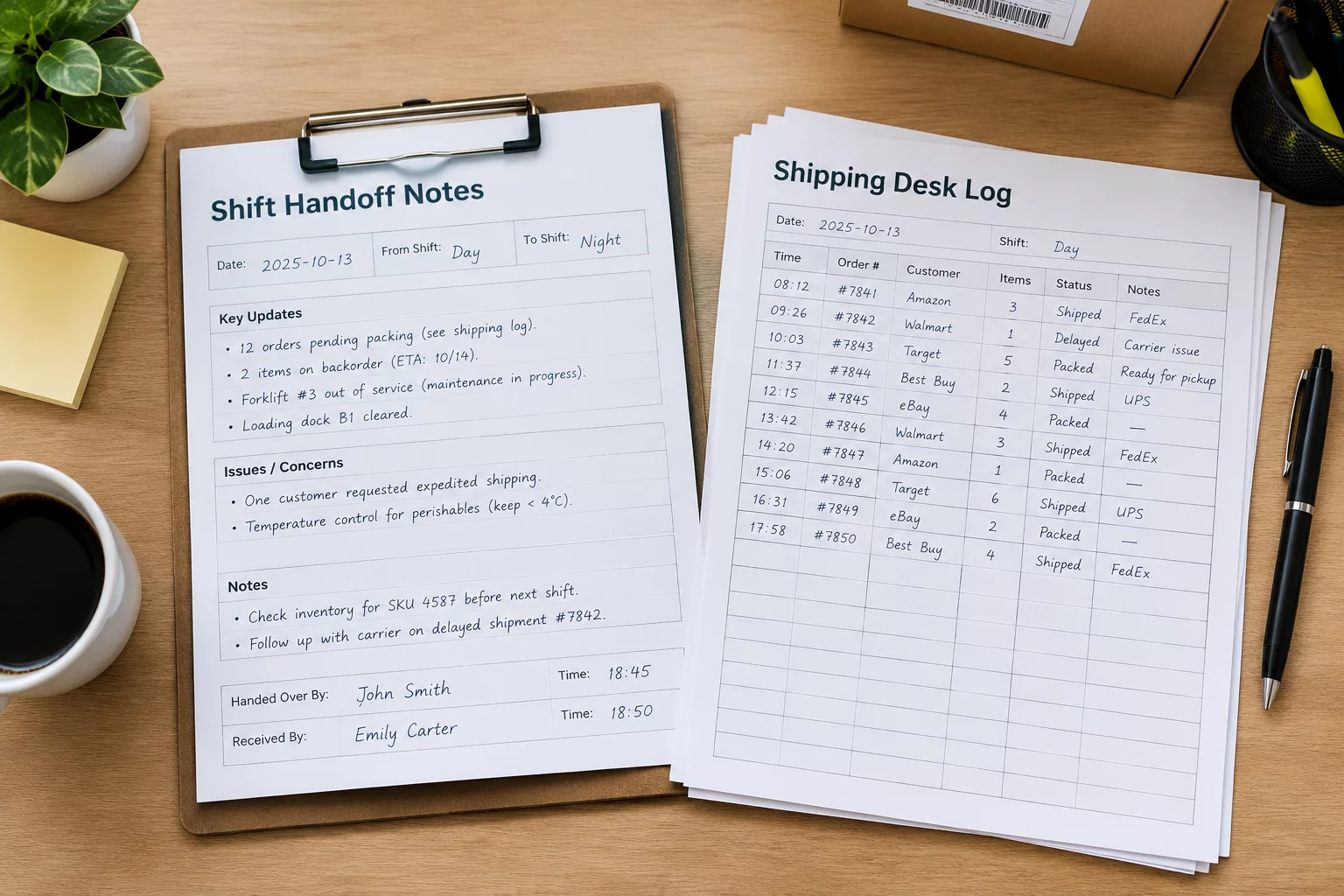
A reliable handoff note serves as the connective tissue between physical parcel realities and software configuration states. In fast-paced fulfillment hubs, verbal briefings vanish the moment the warehouse floor becomes noisy or incoming couriers arrive early. Clear, structured handoff entries ground every temporary override in recorded facts, specifying why a default was changed, which account was impacted, and whether the incoming specialist must revert or sustain the configuration.
Core Information Required in Every Operator Handover
Leaving notes like "Checked account 402" or "Override applied" introduces dangerous ambiguity into automated dispatches. Effective operational handoffs demand four non-negotiable points of context that allow the next operator to make autonomous, informed shipping decisions without guessing:
- Exact Customer Account & Profile ID: Identify whether changes occurred in the universal master database or a single-use station override.
- Concrete Trigger Condition: Document the exact issue that forced the deviation, such as emergency air upgrade or non-standard crate dimensions.
- Reversion Protocol & Expiration: Specify whether the change applies exclusively to today's batch or requires reversion prior to tomorrow's 08:00 cutoff.
When an incoming desk technician steps into the terminal, these structured details eliminate speculative testing and prevent accidental rate overruns. The shift begins with complete situational clarity rather than forensic troubleshooting.
Closing the Loop: Reversion Checks Before Shift Completion
The handoff procedure is incomplete until the outgoing operator verifies that open exceptions are logged and uncommitted software drafts are either manifested or cleared. Leaving half-entered package manifests locked in the terminal causes profile synchronization collisions across network clients. Establishing a mandatory 15-minute desk audit prior to departure guarantees that incoming specialists inherit clean workstation states, calibrated scale readings, and an explicit roster of shipments requiring secondary carrier authorization.
Essential Handoff Best Practices
Key operational tenets to enforce across every shipping station during shift transitions:
- Never rely on memory: write down every manual rate, dimension, or billing account modification before logging off.
- Flag expiration criteria clearly: state explicitly if a customer default must revert upon midnight manifest batching.
- Inspect pending batches: ensure open exceptions are resolved or assigned to an active holding queue with distinct instructions.
Facing Recurring Shift Miscommunication?
Submit field scenarios or consult our registry templates to refine your facility's cross-operator handoff protocols.